Europe's Boat and Bus Services
High Seas Ferry, Highway Coach
Ships, cabins, docks, tickets, reservations, luggage, dining, international buses, terminals.

The Silja Symphony and her twin sister Silja Serenade are magnificent
ferries carrying passengers between Stockholm, Sweden and Helsinki, Finland.
Many local passengers take the ride for the duty free shopping, and party hard
with good entertainment in the bars on board. Remember to reset your watch because
Finland and Sweden are in different time zones.
Carpe diem. Vivere bene! Gratia Deo.
Chapter 17 part 4 of
HOW TO EUROPE:
The Complete Travelers Handbook
John Bermont

This entire book is published totally free on-line by the author, photographer, and webmaster, yours truly, with help from my daughter Stephanie. I welcome all questions, comments, compliments, and complaints. For contact information please see NOTE TO READERS. Updated 21 November 2015.

Your Go-To Travel Store
Go ahead, try to rock the boat.
This Internet edition of chapter 17 is divided into four parts because it is so big. The four parts are:
- Trains in Europe: A Primer for Riding the Rails.
- European Rail Stations: Finding Your Way.
- Night Trains in Europe: Sleeping City to City.
- Boat and Bus: High Seas Ferry, Highway Coach .
FERRIES
Boats and ferries are a convenient way to travel between Ireland and England and the Continent, the countries bordering the Baltic Sea, between Italy and Greece, around the Black Sea, around Lac Leman, and to other water-bound places. If you are in a hurry take a plane.
Water type people are fun loving and eager for new experiences. With the close quarters on most ferries it is difficult to not meet someone for a conversation and maybe a beverage. Facilities on board most ships help this along.
Tickets
Tickets are sold at the port, or straight through train/boat/train tickets can be purchased for, say, Amsterdam to Copenhagen, at the major train stations.
Eurailpass allows free passage or reduced fares on many ferries. In most cases, service is provided by more than one steamship company but Eurailpass is only valid for one of the companies. Make sure that you go to the right dock at the right time for a discounted ride with your rail pass.
Eurailpass does not entitle you to a private cabin. You pay extra for a cabin on overnight ferries.
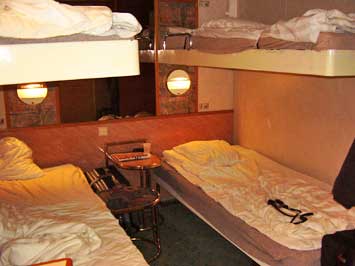
Share a bunk room with three others of the same gender on the Silja Symphony ferry from Stockholm to Helsinki. The cabin comes complete with a tiny closet and a full bathroom. My cabin mates were a Finnish truck driver and two mechanical engineering students from Turkey who were moving from Sweden to Finland. Their luggage was too much so they stowed it in the ship's luggage room. If you are traveling on a rail pass you get a special fare on this ferry.
Port taxes are often charged. These are in addition to the price of the ticket and must be paid before boarding. Have a few extra dollars worth of local currency in your pocket when you go to the port. I have not experienced a fee for getting off.
It is best to buy your ticket or cabin supplement at an office of the shipping company. In Brindisi and in Patras there must be a hundred shops selling tickets for the Greek/Italian ferries.

The Nisikli Turizm agency offers daily ferry service from Varna, Bulgaria to Istanbul, Turkey, and from Varna to Constanta, Romania. "Non stop" in the window means that they answer the phone during the lunch hours. On the left side of the window the place called BAPHA is the Bulgarian speling of Varna. Everything else on the left side is also in Bulgarian, and I hope that it is more understandable than the English version on the right side.
Boarding
The ferries carry cars and trucks, and often whole trains roll on board. There is sometimes a separate gang plank for pedestrians, but often you'll walk up the vehicle ramp dodging cars and trucks. The ramp can be wet, oily, and slippery so watch your step.
Drive On
I've driven on board a number of times. My first was an overnight ferry from Amsterdam to Gothenburg, from where I made a circuit of Sweden and Denmark, returning on another ferry from Rødbyhavn to Puttgarden, Germany. I made the short crossover from Jutland to Sweden on another trip. In the south, we went from Ancona, Italy to Patra, Greece on an overnighter with a car. Those Greek truck drivers sure can party. I've driven onto small river ferries several times in Holland.
Bringing your car on an overnight long distance ferry is expensive, but you can't drive a car over open waters. You should inquire about reservations in advance during high traffic seasons.
Usually you park in the hold under crew directions and give your keys to the crew master. In some cases the ship's crew parks the cars and 18-wheelers, and they pack them in tighter than anything you can imagine. You will not be able to get into your car during the voyage. Do not leave any valuables in your car.
At the dock, early arrivals get better service, but may or may not get off first depending on whether the ship comes into the dock bow or stern first.
Your car may be moved by the crew to allow others to get off if the ship makes other ports before your destination and your car is in the way. We were the last to drive on the ship in Ancona and had a precarious parking spot at the top of a ramp. The ship made port twice before reaching Patras, our destination. Each time I went to the aft bridge and watched our car to make sure it made it back on board before steaming out of port. Better to make sure than to be sorry I thought, and it was an interesting show watching the dock side operations.
Facilities
On board, you'll normally find a large number of theater-style seats, bars and a disco (with more comfortable chairs), cafeteria or snack bar, dining room, currency exchange, duty free shop, casino or just a blackjack table, plus the necessary facilities and a lot of "do not enter" doors. Small river crossing ferries have no amenities, but for a five minute ride you can probably do without.
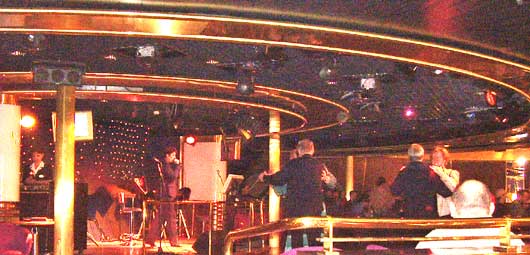
This is the bar and dance area of the MS Romantika of the Tallink Line on the sailing from Helsinki, Finland to Tallinn, Estonia. The entertainment consisted of karaoke with popular American songs sung in languages I couldn't understand.
Ferry Reservations
Reservations are normally not required. There is enough deck space on most of the big ferries for an army brigade. If you want a cabin, you should reserve it as soon as possible.
When reserving a bunk in a cabin, specify whether you want an upper or a lower berth.
I met a honeymoon couple who thought they were getting a private cabin. When they boarded they found out that they had tickets for two berths — him in a cabin with three other fellows and she in with three other girls, and they paid 25% more than they should have for the two berths at a ticket shop. They complained to the purser and he was kind enough to help their marriage off the rocks by giving them a private cabin at no extra charge.
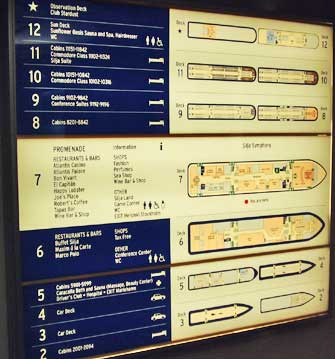
Each ship normally has posters showing how the decks are stacked
and the floor plan for the deck you are on. This is the Silja
Symphony. The bar at the aft end is the preferred place to be because the ride is
smoother in the rear, the chairs are more comfortable, and there may be
entertainment. Also, you can settle your stomach with a shot of scotch. Toast or
crackers can also help if the waves are getting you queezy. Your EurailPass bunk is
down there with the fishes on deck 2, below the cars. A low deck is definitely
smoother sailing in a storm than if you were up there on the Sun Deck, 12.
Click here to see the photo in greater detail.
Dining
If there is a formal dining room, eating on the long distance ferries is even better than on the high speed international trains. First and second seatings are announced before leaving port. It is best to put in your reservation as soon as possible. If you do not hear the announcement, ask the purser. On Scandinavian ferries the smorgasbords — breakfast, lunch, and dinner — are good values for great food. Don't miss a chance for one of these feasts.
Low budget travelers should bring a picnic. The cafeteria and snack bars on board are usually quite expensive and the quality is fast food.
Coin of the Captain's Realm
Usually, money of each country on the route is accepted for food and goods. Change your greenbacks at the purser's office if there is no regular exchange office.
Duty Free Shops
Virtually every ferry which crosses international borders, and that is virtually every ferry, has a duty free shop. Locals stock up on tobacco and alcohol, products which suffer some pretty high taxes in most countries.
In the duty free shops, the clerks expect you to take a shopping basket. Even if you are only buying one bottle, they don't want you to carry it (and maybe slip it under your coat).
Lockers
Luggage lockers are only available on a few ferries. Normally, those who are sleeping on chairs and did not take a cabin stack their luggage in one central area. I haven't met anybody who suffered a theft on board, but remember to leave no cameras or valuables in your bag.
The ship's safe is normally available for storing your valuables. Ask the purser. I slept in a chair and used the safe on the Espresso Grecia from Italy to Greece but they refused to give me a receipt or key as hotels always do. The next morning one of my cameras was missing. After I protested, they finally gave it back, laughing. Nice joke for them.
The safe on the Silja Symphony is free and is big enough to hold a couple of cameras and other items.
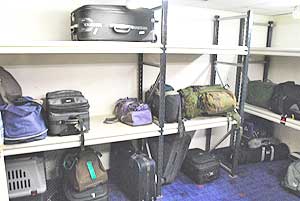
The luggage room on the Stena Line ferry from Fishguard, Wales to Rosslare, Ireland is kept locked during the voyage. That's my carry-on next to the big blue thing on the left of the middle shelf. With that little roller bag I travel for weeks and months. Pack light or be a burro. See chapter 5 for clothing and packing tips. Never leave any valuables in your luggage.
Time Zone
Ship time is usually the time at the home port of the ship. This is important when crossing between Finland and Sweden, France and Ireland, France and England, and Italy and Greece. In each case the ports are in different time zones. With abbreviated dining hours, I have missed my lunch a couple times on these ferries because of confusing signs and/or my own lack of attention. If in doubt, ask a steward in the dining room and synchronize your watch to his.
The Purser
If you have a problem or question on board, always ask the purser. They invariably speak English, but seem to want to be doing something else than answering questions. So ask your questions clearly and completely. They will never volunteer any information.
Getting Off
Disembarking is usually quite simple. Just walk down the plank or up the ramp with everybody else, flash your passport to the police, and walk through the customs "Nothing to Declare" green door. Passport police and customs inspectors are becoming an extinct species so it is likely that you won't be greeted by anybody as you get off.
Returning to Italy from Greece, though, was another story, historically speaking. Years ago on arrival at Brindinsi only two passport police were on duty and they looked at every passport with extra care. It took over half an hour to get off the ship and there were still plenty of people behind me. I knew the port so I started walking toward the exit a few hundred yards away, but two policemen waved me back (waving back in Italian is similar to the "get lost" wave in America, but not as abrupt with the motion) and pointed me toward a building. I walked back to the building, in one door and out the other side without paying any attention to the commotion going on at my left, and then back toward the port exit where I had been several minutes earlier. I was anxious to get out of there so I wouldn't miss the train. Later on the train, some travelers told me that the Italian police made everybody put their bags down on a long counter. Then dogs walked over the bags several times, sniffing for dope. I had walked right past the whole operation. Nobody asked me anything in there!
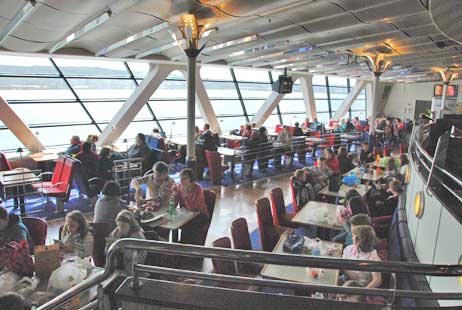
The Stena Line high speed ferry from Belfast, Ireland to Stranraer, Scotland has a pleasant open dining area with a view. There were scores of pre-teen kids on this ship, apparently on a school field trip, but they were surprisingly quiet and well behaved. The ship has a quiet zone if you need even less noise. There was supposed to be free WiFi but it was out of order. Technology is great, when it works.
Potpourri
A few large ferries have telephones. A few have free WiFi. With WiFi you can use Skype and talk for free around the world. See Telephoning to, from, and within Europe.
The large ferries feature casinos with roulette, blackjack, and slot machines. A live band and dance floor attracts young and old. It reminds you of a wedding party. There might be a movie theater on board.
Ships often have showers in the restrooms, but you must bring your own soap and towels. If you have a cabin, soap and towels are usually provided.
Dress on board is casual in the south and more formal in the north. Between Stockholm and Helsinki many of the locals dress up pretty smartly and party hard. Between Italy and Greece they party hard in dress down.
In rough weather, the ship can heave pretty badly. The Baltic, Adriatic, and Ionian seas, and the English Channel can have some unbelievably huge waves. Ride in the back to reduce the motion. You might want to look around for life vests in really bad conditions so you know where to run if the ship starts to drink.
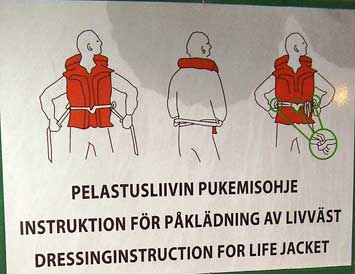
The Silja ferry boat Symphony sails between Stockholm, Sweden and Helsinki, Finland. Instructions for use of the life jackets is posted in Finnish, Swedish, and a sort of English. Sorry, no stewardess will demonstrate nor will you be given safety instructions as on airplanes. You're on your own.
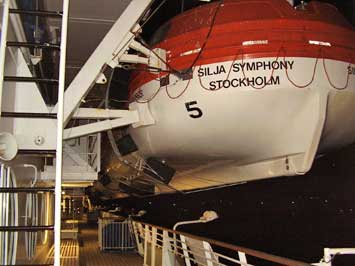
The life jackets are probably stored in the life boats, but I've never had to verify. The life boats are on deck number 8 but are hard to identify on the ship plan poster above. There are only eight life boats so get moving if the alarm horn sounds.
INTERCITY BUSES
Some cities in Europe are train deprived. In those cases intercity buses serve to get you from one town to another. Even where there is a train it is usually cheaper to take the bus. A couple of quality international bus lines now serve scores of cities throughout Europe.
I've used intercity buses in maybe a dozen countries throughout Europe — Holland, Portugal, Greece, Latvia, and others. Normally the buses are big comfortable air conditioned cruisers. Sometimes they are something less. No matter how big and comfortable they are a train is always bigger and more comfortable. But buses are cheap.

This is the bus I rode in on from Tallinn, Estonia to Riga, Latvia. It cost $17 for the five hour trip, with no pit stops. But there was a stop at the border for the passport police even though Estonia and Latvia are both members of the European Union. At the Riga bus station a pee in the urinal cost 0.10 lati but I had no Latvian cash and had to find a money changer fast.
Bus Terminal
The bus terminal is usually in the center of town, probably in sight of the train station, and often right in front of it. Parking places for the buses are always numbered. If the bus has a number the parking place may have the bus number posted. Unfortunately the bus parking places are usually some distance from the door of the terminal so if the weather is inclement you can have a nasty wait.
Verify with others standing at the bus stop that you are at the right place. Bus stops have far less explicit information than train platforms. At a bus stop in Riga I was waiting at position number 2 for the Ecolines bus to Villnius. It didn't appear when it should have so I went back in to the ticket office to inquire. The clerk said that it was 10 minutes late. After standing at position 2 for another 20 minutes an Ecolines bus drove by me and right out of the station. I went back to the ticket office to inquire again and was told that the bus had just left. Then I learned that there happens to be another section of the Riga bus station which also has a position number 2 and that was where the bus was waiting. I got no refund and had to buy another ticket, on the next bus which happened to be a Eurolines bus.

I'm waiting with the locals at the Waterford bus station for my coach to Cork. Rail service in Ireland is not plentiful so buses are often the best way to get around the country. They are certainly cheaper than renting a car, by a mile. Besides, can you drive on the left side of the road? How about going clockwise on a traffic circle, known as a timpeallán in Eire?
Tickets and Reservations
Tickets can be purchased in the office of the bus line. Sometimes tickets can be purchased from the bus driver.
Seat reservations are required on some buses, especially night buses. Your ticket will indicate your place on the bus.

The Ecolines bus route map is posted in the Vilnius bus station.
Lietuva is the way they spell Lithuania in Lithuania.
Ecolines goes as far as Rome, Paris, London, Amsterdam, and Copenhagen. It also
goes to Odessa, Ukraine but that route takes you through Belarus for
which you will need a visa, and you can't buy it at the border.
Click here to see
this map in greater detail.
Schedules
Bus schedules are posted in the ticket offices and often at the bus parking places. Since there are only a few buses daily it is fairly easy to figure them out. It is also important to be on time because the next bus may not depart for hours, or until the next day.
Luggage
Luggage space is usually provided in a hold under the seats. Sometimes the driver or an assistant will put it in or you can throw it in yourself. Do not leave any valuables in your luggage. Thieves can smell cameras and cash like dogs can smell a fresh steak bone.
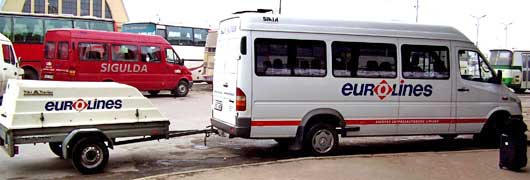
After missing the Ecolines cruiser from Riga, Latvia my next choice was this van operated by Eurolines. We put our luggage in the trailer. This one cost about $13 for the five hour afternoon ride to Villnius, Lithuania, again with no stops except for the passport police and to drop off some fellows somewhere in the middle of snowy nowhere.
Overnight Buses
There are several international bus lines which offer night service. Sleeping on buses is not pleasant at all. You must sleep sitting up and cramped unless you get lucky and have the last row to yourself. I will not do it again unless there is no other practical alternative.
Toilets
A few international buses have toilets. It's hard to know so it would be a good idea to drain your bladder before getting on board. On my mid-winter overnight ride from Villnius, Lithuania to Warsaw, Poland the toilet was sealed closed because it had frozen up. Fortunately the driver made a 20 minute stop at the border where I siezed the moments to make a currency exchange and take a quick leak. Normally the only time that a bus stops before the destination is to let people off or for passport checks.
MOVING ON
- Trains in Europe: A Rail Primer.
- European Rail Stations: Finding Your Way.
- Night Trains in Europe: Sleeping City to City.
- Boat and Bus: High Seas Ferry, Highway Coach .
Have a good trip!
NOTE TO READERS
I welcome questions and comments. If you have any concerns about your trip to Europe that have not been covered well enough in this section please do not hesitate to write and ask. When you write please include relevant details, per the folowing paragraphs.
I do not open attachments. I do not click links to web pages of any kind. I will reply in a day or two, usually.
Do not forget to smell the hyacinths. At your liesure scroll through the Table of Contents of How To Europe: The Complete Travelers Handbook and read all 30 chapters, FREE on line. Good deal! You'll probably find the answers you seek, and some you didn't know you needed.
My email address is [email protected].
FREE
This web site is totally free for everyone, and a labor of love for me. To keep it afloat I receive a commission from Amazon.com for all goods purchased through the adverts I have selected, and any other products you might buy when you are on the Amazon site. Amazon has almost everything for sale, except the Brooklyn Bridge and Mount Rushmore.
Please visit my on-line store at
 .
Your support is most gratefuly appreciated. TIA.
.
Your support is most gratefuly appreciated. TIA.
To like and like not:


Adverts
To support this site:
Please buy your goods at:Amazon.com
Shop in your shorts!
Please clean out your cookie jar before clicking.
This rail timetable is produced by the compilers of the former Thomas Cook European Rail Timetable, my bible for decades of train travel in Europe.
 European Rail Timetable
Summer 2015
 Europe by Rail:
The Definitive Guide for Independent Travellers
Thomas Cook Rail Guides
 Europe by Eurail 2015:
Touring Europe by Train
by Laverne Ferguson-Kosinski
 Rail Map of Europe
The best travel guide to all of Europe.
 Europe on a Shoestring
Lonely Planet
A comprehensive guide to 3,000 hotels and restaurants in 44 major cities throughout Europe, in English. Separate books in the Michelin Red series cover individual countries in greater detail. This is a must have for frequent travelers.
 Main Cities of Europe 2015
Michelin Guide
This is my book, available at Amazon.com. The last edition was published in 2003. Critical up-dates are on this web site.
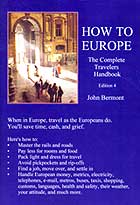 How To Europe
The Complete
Travelers Handbook
by John Bermont
Keep a travel journal, so you can write your own travel book. This is my favorite pocket size note book.
It is 5½"x3½"x½".
Markings by C.R. Gibson Brown Ruled Paper Bonded Leather Journal, Small (MJ3-4792)
Rolling luggage sure beats lugging a pack on your back.
 Travelpro Luggage Maxlite 2 20" Expandable Spinner
A shoulder bag for your daily walk-about.
 Travelpro Luggage Maxlite3 Soft Tote
Keep your stuff organized.

Luggage Packing Cubes
eBags 3pc Set
The two gallon size is excellent for packing your clothes, but it is hard to find in Europe.
 Two gallon plastic bags
ZipLoc by SC Johnson
Inconspicuously lock your zippered luggage with a black wire tie.
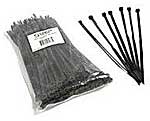 Cables to Go 43036 Cable Ties - 100 Pack (Black)
A Swiss Army Knife is unquestionably the handiest item a traveler can carry, except not on a plane.
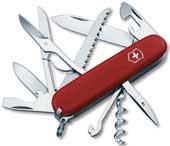 Victorinox Swiss Army Huntsman II Knife
Plug adapters are needed throughout Europe. There are at least five models used in different countries.
Note: The highlighted #E number is purely arbitrary. It is meant to help quickly identify products in this advert column when you write in for electrical advice.
See NOTE TO READERS.
This adapter is for the standard grounded plug in France, Germany, and northern Europe. It does not fit in outlets of Italy, Switzerland, Ireland, and Britain.
#E-010
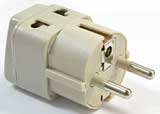 Grounded Universal 2 in 1 Plug Adapter
European Schuko plug.
4.8 mm prongs.
Equivalent to type E and F.
You can use this ungrounded Euro plug in some European countries.
#E-020
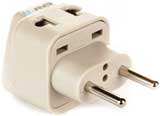 Universal 2 in 1 Plug Adapter
Euro Plug
4.0 mm prongs.
Equivalent to type C.
This is a universal plug adapter for the UK and Ireland.
#E-030
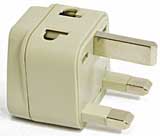 AC Adapter Plug for use in England, Scotland, Wales, and Ireland
Equivalent to type G.
Here is the Swiss version.
#E-040
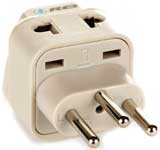 Grounded Universal 2 in 1 Plug Adapter
Type J for Switzerland
Here is the grounded Italian model.
#E-050
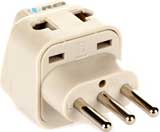 Grounded Universal 2 in 1 Plug Adapter
Type L for Italy
This 110-250 volt power surge strip has three universal outlets and an American grounded plug so it needs a plug adapter for the countries you are visiting. Make sure your gizmos are rated for 110-240 volts.
#E-060
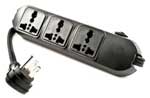 SM-60 Universal 3 Outlet Power Strip Surge Protector for Worldwide Travel. 110V-250V with Overload Protection.
If your gizmos charge through a USB port this can keep you going. European cars have the same 12 volt system as American cars.
#E-200
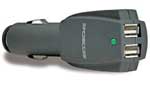 Scosche Dual USB
Car Charger
The links in this pink field take you directly to a page at Amazon.com. The Amazon page details the item, and in most cases includes candid and critical comments from others who have bought the item.
Amazon pays my site a small commission when you click and order an item, if you put it in your shopping cart within 24 hours based on the cookie they set on your computer. If you don't want to make a quick decision just put it in your shopping cart, think it over, and come back later. The revenue covers the cost of maintaing this web site and keeps it free to users.
You benefit when buying here because Amazon has:
- 20% - 30% discount on many items,
- free shipping deals, direct to your door,
- no sales tax on internet purchases in most states,
- zillions of products, well almost,
- fast delivery even when it is free,
- shipment tracking in UPS, USPS, FedEx,
- easy returns if you are not happy with the product.
You win we win. Thanks for your support!!
Have a good trip in life,
John Bermont
Note: Italicized notations by the author.
For small appliances travelers may find these true transformers useful. They deliver the full sine wave. Caution: The wattage rating is the max short term. For continuous duty I recommend that you select a transformer rated at two times the combined watts of all gizmos plugged it. But check your gizmo's electrical specification plate before buying one of these. Most electronic devices are dual voltage and can be plugged in any European outlet when using the appropriate plug adapter.
This 50 watt 220/110 volt step down transformer is good for very small 110 volt appliances and light duty chargers.
#E-070
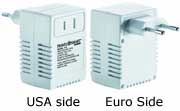 Travel Smart by Conair 50-Watt International Transformer
An RFID blocking wallet protects your passport and credit cards from identity theft in public places.
 Travelon RFID Blocking Passport Case
 Anne Klein Women's Classic Double-Breasted Coat