The original do-it-yourself travel guide to Europe SM


Packing List for Europe

Travel Short List

Packing for Europe.
Pack light, TSA luggage rules, 3 ounces of liquids, alcohol, travelers supplies.


Home


To support this site, please buy your goods at:
The Amazon Store
Shop in your shorts!


You will need one or more of these plug adapters for your appliances and chargers.
Electrical Plug Adapter USA to Continental Europe
Plug Adapter
USA to Continental Europe
by Samsonite


SIMRAN PLUG ADAPTER - CONVERTS GROUNDED USA PLUGS TO EUROPE PLUG-GERMAN SHUCKO PLUG (VP 11W)
SIMRAN PLUG ADAPTER
Adapts grounded USA plugs to European plug


This is a universal plug adapter for the UK and Ireland.
Samsonite Grounded Adaptor Plug - United Kingdom, Ireland


To use this with American plugs you'll also need the USA to Continental Europe adapter.

Grounded Adapter
Europe to Switzerland


For charging the batteries of more than one gizmo at a time use this 250 volt universal power strip. It comes with a grounded Continental plug so it does not need an adapter plug for Europe. See the next item if you are going to the British Isles.
Universal Outlet Surge Protector Power Strip for AC 220V/240V Countries. Max Load 13A 250V 50/60HZ - 450 Joules. CE Certified
Surge Protector
Power Strip
6 Universal Outlets
220/240 Volt 50/60Hz


To use the surge strip in Britain and Ireland you will need one of these plug adapters.
Grounded Adapter - Europe to England UK Britain
Grounded Adapter
Europe to
Britain and Ireland


Only use this if your appliance is not marked 110-240 v and uses less than 50 watts.

Grounded Transformer
USA to Continental Europe
50 Watts, 220v to 110v


This is a stronger transformer rated for 200 watts.

Transformer - 200 Watt Non Grounded Heavy Duty


Shopping easy at

The links in this green field take you directly to a page at Amazon.com. That page details the item, and in some cases includes candid and critical comments from others who have bought the item.

Amazon.com pays my site a small commission when you click and order an item, if you put it in your shopping cart within 24 hours based on the cookie they set on your computer. If you don't want to make a quick decision just put it in your shopping cart, think it over, and come back later. You benefit when buying here because Amazon.com has a 20% to 30% discount on many items plus a free shipping deal. The third bonus is that there is no sales tax on internet purchases in most states. Delivery is fast even when it is free, and returns are easy if you are not happy with the product.

You win we win. Thanks for your support!!

Have a good trip in life,
John Bermont


Note: Italicized notations by the author.
' ' ' ' ' '
It rains. Be prepared.

Totes Titanium Auto-Open/Close Umbrella


Weather protection is essential. This is a great lightweight water repellent windbreaker.

The Stormbreaker
by Turfer Sport


Womens's Light Weight Endurance Jacket


Look sharp and be comfortable.
Women's Long Sleeve Cotton Turtleneck by Lands' End
Women's Long Sleeve Cotton Turtleneck
by Lands' End


Jessica Simpson Women's Satin Trench Rainwear


I wore one similar to this on my early spring trip to London and Dublin.
Lamb Leather Bomber Jacket - Brown


This is my "standard" shirt for most of the year in Europe.
Men's Combed Cotton Euro Design Ski Turtleneck


My favorite T-shirt/undershirt has a pocket for securely carrying passport, cash, and credit cards.
Hanes 6.1oz. Tagless Pocket T-Shirt
Hanes Tagless Pocket T-Shirt


For leg comfort on the plane.
Arriva Travel-Tec Travel Legwear with Smart Compression Technology


Block the light and noise while flying.
Bucky Shades Sleep Mask With Earplugs
Bucky Shades Sleep Mask
With Earplugs


Certainly a better pillow than the corporate issue on the plane.
Bucky Fuzzy Wuzzy U Pillow With Snap & Go


To relax and sleep on the plane.
Organic Valerian Root 515mg - 100 - Capsule


Rolling luggage sure beats lugging a pack on your back.
Delsey Helium Breeze 2.0 Carry-On Upright, 21
Delsey Helium Breeze 2.0 Carry-On Upright, 21"


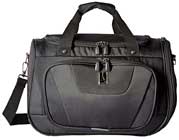
Day luggage for your walkabout.
Delsey Helium Fusion Personal Bag
Delsey Helium Fusion
Personal Bag


A rugged travel combo.
McKleinUSA Buckingham 58464 P Series Tech-Lite 1680D Ballistic Nylon Executive Travel Combo (Brown)
McKleinUSA Buckingham Tech-Lite Ballistic Nylon Executive Travel Combo


Wear a money belt under your shirt to protect your passport and valuables, especially if you are staying in hostels or dorms.
Victorinox Deluxe Concealed Security Belt


This portable combo door stopper and alarm will give you additional security in your hotel room.
GE 50246 Smart Home Door Stop Alarm
GE 50246 Smart Home
Door Stop Alarm


This carry-on liquids kit meets TSA airline rules.
EAGLE CREEK PACK-IT CUSTOM TRAVEL BOTTLE
Eagle Creek Pack-It Custom Travel Bottle Kit


Walk on cork for all day comfort.

Birkenstock Bali Sandal


This is my everyday footwear, except in a storm.

Birkenstock
Arizona Two Strap
Sandal


Just as comfortable as tennies and they look sharp.

Men's Riva
Comfortech Slip-on
by Florsheim


Stay trimmed and neat.

Gillette Mach3
Turbo Shaving System


Royce Leather Ladies
Travel Kit with Shaver


Make sure that your electrical appliances are dual voltage so they will work in Europe.
Conair's Dual-Voltage Ionic Hair Dryer
Vagabond Compact Styler
Conair's Dual-Voltage Ionic Hair Dryer


Conair Flat Iron 2
Conair Flat Iron 2" Ceramic Straightener
Dual Voltage


Remington H-1015 All That Quick Curl Travel Hair Setter
Travel Hair Setter
Dual Voltage
Remington H-1015


SteamFast SF-717 Home-and-Away Mini Steam Iron (dual voltage)


Braun Series 1 1-150 Men's Shaver
Braun Series 1 150 Men's Shaver with Automatic Worldwide Voltage Adjustment


For light sleepers here is an international "white noise" machine.
Lewis N. Clark Immersion Heater 120/240V
Marsona TSCi-330 White Noise Travel Sound Conditioner For both USA and International Use


For coffee or tea in your room, without waiting or paying for room service.
Lewis N. Clark Immersion Heater 120/240V


Be on time. Trains and planes don't wait.
Casio G-Shock Watch<br>G100-1BV
Casio Men's G-Shock Ana-Digi Chronograph Sport Watch


Casio G-Shock Watch<br>G100-1BV
Casio Baby-G Ladies Watch


Absolutely the best battery for digital cameras which use AA batteries.
Energizer - AA Lithium Batteries - 4 Pack
Energizer
AA Lithium Batteries
4 Pack


Rechargeable batteries will pay for themselves in the long run.
Sony BCG-34HRMF4 Battery Charger with LCD Display and 4 AA Ni-MH Rechargeable Batteries


Wash in your room basin and save time, trouble, and money.

Woolite Laundry Soap
20 packs, ¼ oz. each


Inflatable clothes hangars help with drip dry clothes washed in your room.
Inflatable Travel & Laundry Hangers Drip Dry Clothes Set Of 4 (04500) by Whitney Design
Inflatable Travel & Laundry Hangers Set Of 4 by Whitney Design


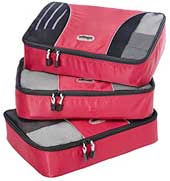
Keep your stuff organized.
eBags Medium Packing Cubes - 3pc Set
eBags Luggage Packing Cubes - 3pc Set - Raspberry


Samsonite Space Saver Bags for Travel


The two gallon size is excellent for packing your clothes, but it is hard to find in Europe.

2 gal. clear plastic bags
ZipLoc by SC Johnson


Quart clear plastic bags
One-Zip by Hefty


Much stronger than duct tape and doesn't leave that gummy residue.

Strapping Tape
1" x 60 yards
3M Company #8957-1


My book will get you started.
How To Europe The Complete Travelers Handbook by John Bermont
How To Europe
The Complete
Travelers Handbook
by John Bermont


The best travel guide to all of Europe.
Europe on a Shoestring Lonely Planet
Europe on a Shoestring
Lonely Planet


The essential timetable and handbook for rail travelers.
European Rail Timetable Summer 2010 Independent Travellers Edition Thomas Cook
European Rail Timetable
Summer 2010
Independent Travellers Edition
Thomas Cook


A comprehensive guide to 3,000 hotels and restaurants in 44 major cities throughout Europe.
Michelin Guide 2010 Main Cities of Europe
Main Cities of Europe 2010
Michelin Guide


This will come in very handy once in a while.

Swiss Army
LED Flashlight


Bring home the memories.
Olympus FE360 8MP Digital Camera with 3x Optical Dual Zoom (Silver)


A camera case protects your LCD screen.

Case Logic ECB-1 EVA Compact Camera Case (Black/Red)


This is the camera that I use,
Nikon D60 10.2MP Digital SLR Camera (Body Only)


with this amazing lens,
Nikon 18-200mm f/3.5-5.6 G ED-IF AF-S VR [Vibration Reduction] DX Lens


and this filter.
HOYA 72mm Circularizing Polarizing Filter


More camera options.
Canon Digital Rebel XTi 10.1MP Digital SLR Camera with EF-S 18-55mm f/3.5-5.6 Lens (Black)
Canon Rebel XTi 10.1MP
Digital SLR Camera with
18-55mm f/3.5-5.6 Lens


Olympus Evolt E500 8MP Digital SLR with 14-45mm f/3.5-5.6 & 40-150mm f/3.5-4.5 Zuiko Lenses
Olympus Evolt E500 8MP
Digital SLR with
14-45mm f/3.5-5.6 & 40-150mm f/3.5-4.5
Zuiko Lenses


Canon EOS Rebel 2000 Silver Date 35mm SLR Camera Deluxe Kit with 28-90mm Lens
35mm SLR Camera
Deluxe Kit with 28-90mm Lens
Canon EOS Rebel 2000 Silver Date


Sony DCR-DVD108 DVD
Handycam Camcorder
with 40x Optical Zoom


This is one of the handiest camera accessories I own.
Adorama CLAMP-POD SMALL 4001
CLAMP-POD
Adorama SMALL 4001


Kindle

Amazon's
Wireless Reading Device

Affiliate

Magellan's Travel


Affiliates


Save up to 90% with Rebtel for International Calls

Wireless Emporium

Rail passes and tickets from Raileurope.com

The World's Largest Map Store!

STA Travel: Student Travel Experts

KLM_88x31_Logo

Look No Further Best Rate Guarantee

Business Class Deals to Europe - Save up to 65%


Shop at eBags


NEW! See Stephanie's Paris Blog —> O hey Europe.

Chapter 6 (without photos) of
HOW TO EUROPE
The Complete Travelers Handbook
Internet edition.
A page from enjoy-europe.com with John Bermont


Your packing list — the shorter the better.

How much you pack for your trip will have a greater influence on your enjoyment of traveling in Europe than any other factor. Pack light.

A rundown on your clothing list was given in the prior chapter 5, What To Wear in Europe: Travel Clothes for All Occasions. That is only half of your pack. Your suitcase must also be a miniature bathroom closet, laundry room, drugstore, tool box, photo gear headquarters, office supply, and library of guide books, maps, and dictionaries. This is all in addition to your clothes. Good luck!

For details about what kind of luggage to use see chapter 7, Luggage for Europe: Travel Light, Travel Light, Travel Light.

If you want to skip over all the verbiage in this chapter and go straight to a check-off packing list then see The Finale, Packing List and Last Call: What You Need to Travel in Europe, All in One Place. Come back here later to see why you need to pack vinegar and vodka.

FORBIDDEN ITEMS

Before discussing what you should pack in your luggage let's have a look at what you can not pack. Safety and security govern. These subjects are patrolled by the Transportation Security Administration, TSA.

The TSA is perhaps the most criticized of government agencies, except for the IRS. The TSA is part of the U.S. Department of Homeland Security, itself the object of continuing and severe criticism. The purpose of these agencies is to protect us, but they have caused a great deal of frustration to travelers due to the delays and inconveniences their actions generate. For the sake of your own mental comfort let's assume that they are human beings and they are doing a critical job to the best of their ability. Let's also assume that you are a human being and are doing your best on this planet. But then again, TSA officers are government employees and that is not a high recommendation.

September 11, 2001

The rules have changed since the horror of September 11, 2001. Nothing that can be used as a weapon can be brought on board in your carry-on luggage or on your person. I had carried a Swiss Army knife in my pocket on planes all over the world for over 35 years. It was always in my pocket. No more on planes. Now I must put it in checked baggage, if any, or budget the price of a new one for every flight.

Weapons include scissors, baseball bats, hammers, mace, and anything else capable of injuring or incapacitating a person. Even knitting needles are prohibited on board.

August 10, 2006

On August 10, 2006 a couple of dozen terrorists were uncovered in London. This group had discovered a new way to kill us and disrupt air travel. They had come up with a method of assembling liquid bombs on board. These suicidal maniacs intended to put the liquids in ordinary bottles of shampoo, mouthwash, and such. Once the plane was in the air they would mix the chemicals and set off an explosive reaction, destroying the plane and murdering hundreds of people. Of course this would also send the terrorists directly back to hell, to their great joy.

The immediate reaction of security officials was to prohibit all carry-on luggage on planes from London. There were severe delays and many flights were canceled. Over time the new rule was modified to allow small laptop size cases on board but security officials continued to ban all liquids in carry-on luggage. The rules have been modified gradually since then and hopefully the present carry-on rules will stay constant for a while. If not, I'll up-date this page again.

December 25, 2009

Following the attempted bombing of NW flight 253 from Amsterdam to Detroit on Christmas Day 2009, the Transportation Security Administration issued a statement saying:
TSA issued a directive for additional security measures to be implemented for last point of departure international flights to the United States. Passengers flying into the United States from abroad can expect to see additional security measures at international airports such as increased gate screening including pat-downs and bag searches. During flight, passengers may be asked to follow flight crew instructions, such as stowing personal items, turning off electronic equipment and remaining seated during certain portions of the flight.
This makes no sense. The Christmas bomber had the bomb strapped to his thigh, it was not electronic, and he was sitting through the whole affair. As for gate screening the security people at Amsterdam's Schiphol Airport have been giving me the pat down since the mid 1990s. But they go only half way up the thigh, not into the crotch. The bomber probably knew that from test runs so he had the bomb way up there with his private parts. Carry on bags, plus coats, shoes, and everything else has been going through gate x-ray for years and anything suspicious has been hand inspected. That has happened to me several times.

The TSA nitwits have made a mighty swing at thin air. They better get ready for the next event, a woman with the bomb hidden in her bra. It is time to start profiling and/or get those backscatter X-ray machines in operation. The next bomber may not be so stupid as to not know how to set off his bomb and blow off nothing but his balls.

Present Carry-on Rules

The current liquids regulation (January 2010) on flights originating in the USA is that passengers can bring on board a limited number of small bottles of liquids, aerosols, and gels. None of the containers can be more than 3.4 fluid ounces and all must fit into a single one quart clear resealable plastic bag, e.g. a quart size Ziploc® bag. This is 8"x7" (20.3 cm x 17.7 cm). When you get to the belt which runs through the x-ray machine, remove the plastic bag from your carry-on luggage and put it in a container on the belt.

Exceptions include an allowance for baby milk, prescription drugs, and diabetic glucose solution. Declare these items to the TSA officer at the belt. Make sure that you have a doctor's prescription or a baby with you if you are bringing these items on board.

The TSA recommends that you carry on board only those liquids that you will need during the flight. Hey, this makes sense! Put everything else in your checked luggage. But before you do that, read through this chapter and give some thought to your needs. Remember, Europe is not the Gobi desert. Everything you normally use can be purchased in Europe.

Another important regulation concerns lighters and matches. Matches are prohibited in checked and in carry-on luggage. Some types of lighters are allowed in carry-on but nothing in checked luggage. The torch type lighters are totally prohibited.

It's not a rule but the TSA has a recommendation for packing your bags. They say "De-clutter." Make it easy for the gal or guy looking at the x-ray image to quickly determine what you have in your luggage. This speeds up the process and reduces the frustration of everyone in line. The TSA people are not causing the problem. The problem is the small number of people who don't know the rules or who think that they are above the rules.

Travelers can bring on board beverages and other items which they have purchased in the secure boarding area after clearing the security check point. So yes, you can bring duty free booze and perfumes on board. BUT, if you make a connecting flight in Europe or the USA you are subject to gate security screening again and bottles greater than 3 ounces will be confiscated.

Traditional Airline Rules

Examples of some long standing prohibitions by airlines are: no flammable liquids like fuel or solvents on board, no fireworks, and no harsh household or industrial chemicals. If you have a question about the propriety of any unusual item you wish to bring on board, ask the airline. If you need any of these for traveling, buy them after you land in Europe.

Personal Anecdotes

To be sure, TSA officers are not perfect. On my flight from Amsterdam in January 2006 I was stopped after the x-ray belt and asked to open the small bag in which I was carrying my laptop computer and exposed film. The agent reached in and pulled out a knife. This was a combination knife and fork which looked just like a Swiss Army knife. It had been in my bag for years and I had forgotten all about it. In order to save it I had to put it in checked luggage, but my bags were already checked and on their way to the plane. So I did some quick re-arranging, put my laptop and film in a shopping bag and checked my laptop case at the gate. The interesting thing is that this knife had escaped the notice of TSA in Detroit when I flew to Amsterdam a month earlier.

Incidentally, "mistakes" are not an excuse. If you are caught with a prohibited item while attempting to pass TSA security you are guilty of a Federal crime and can be prosecuted whether it was deliberate or an accident. But TSA people have a heart, and thanks to that I still own my Swiss Army knife. In another episode my daughter got a permission slip from the American Airlines check-in agent that allowed me to accompany Stephanie to the boarding gate for a last hug. I walked through the metal detector and then the TSA fellow ran the wand over me. Beep, beep, beep! I had my Swiss Army knife in my back pocket. Oh NO! My reaction was loud, but not obscene. A nearby female TSA agent accepted my knife and told me I could have it back when I returned from the gate. She slipped it into my hand as I exited. I guess she broke the law and for that I am grateful. I had bought that knife in Switzerland years ago and figured that it would last the rest of my life. Close call.

OVER THE SEAS

As you can see above, the TSA rules for USA passengers are pretty clear. So are the European Union, EU, rules for passengers departing from European airports.

Schiphol Airport, Amsterdam and Heathrow Airport, London

The Schiphol Airport Amsterdam web site reports the following rules effective 6 November 2006 for hand baggage. Liquids, gels and aerosols are only allowed in hand luggage in small quantities (no more than 100 ml per item) and if correctly packaged. These rules will apply to all passengers departing from or changing planes at EU airports.

The new rules cover liquids such as water and other beverages, gels, pastes, lotions and the contents of aerosol cans. Toiletries such as toothpaste, shaving cream, hair gel, lip gloss and creams also fall under the rules.

These are the rules for liquids in your hand luggage:
1. You can only take liquids and gels in containers of no more than 100 millilitres on board the aircraft.
2. These containers must be carried in transparent plastic bags.
3. There is a limit of one transparent plastic bag per person.
4. The volume of the transparent plastic bag may not be greater than 1 litre.
5. The transparent plastic bag must be re-sealable.

As you can see, the EU and USA rules are pretty close. The quantities 100 ml and 3.4 ounces are virtually the same. Trying to find bottles of anything in either of these sizes in any store in the USA is difficult. However my local grocery store has introduced a small travel section with legal sized bottles of essential liquids and gels, plus a special quart plastic bag holding four 3 ounce bottles which you can fill with your own stuff.

The EU allows the liquids in a one liter clear plastic bag. One liter is equal to 1.06 quarts. The size in the USA is one quart. So the quantity you can bring back is slightly larger than what you can bring over.

If you stay within the USA rules you are within the EU rules.

Booze Rules

When coming home many travelers like to bring back some local firewater or a few bottles of a favorite wine. Prior to August 10, 2006 it was perfectly acceptable to bring wine in your carry-on luggage. Many sellers of wine in Europe even provide a handy padded carrying case that could hold up to six bottles. Alas, no more in carry-on cabin baggage.

All is not lost. You can still bring some beverages in carry-on baggage if they are purchased in the duty free shops located in the secure boarding area. Many duty free shops have an impressive selection of distilled spirits. But, if you change planes in Europe or the USA you have a problem. The Schiphol web site says: "If you buy liquids or gels (duty-free) at a European airport and change planes at a European airport, travelling on to the United States, you should allow for the possibility that your purchases will be confiscated at the security checkpoint. This can happen with purchases you make on board an aircraft operated by an airline from an EU country." The lesson is that you want to make your duty free purchases at your last airport in Europe.

You can also place beverages in any quantity in your checked luggage, up to the size and weight allowances of your airline and the import allowance of the state where you will be disembarking and passing US Customs. Pack the bottles securely and double wrap them in socks or t-shirts to prevent breakage. Then, just in case, put them in a resealable plastic bag. The airline baggage handlers do toss luggage about. I hear that it will become an Olympic sport. Theft is an on-going problem so use the wire tie locks on your luggage if you are bringing home any golden or ruby colored liquids.

If you are changing planes in the USA with a bottle of duty free liquor purchased as you left Europe you must make a quick switch. When you return to the USA you must claim your luggage, pass US Customs, and recheck your luggage before continuing. So before rechecking put the bottle in your checked luggage. I caught this at the last second on a recent trip from Amsterdam with a connecting flight in Detroit and saved my bottle from TSA confiscation.

Before bringing home any wine or spirits make sure that your state allows it. Alcohol is regulated by each individual state, a system that goes back to the elimination of Prohibition. Some states are relatively free and others are strict when it comes to importation of alcoholic beverages. In some states it is a felony to bring even one bottle over the state line. You could end up in the slammer with murderers and rapists, depending on how many votes the local prosecutor needs for the next election. US Customs does enforce these state laws. Call your state liquor control commission before you go to find out what you can bring home. The states which have no-wine rules are primarily in the Bible Belt. Funny isn't it? Jesus made wine. He would have been arrested in those states where the powers preach the loudest. Oh hypocrisy, how bitter thy kiss.

If you are thirsty on your flight to or from Europe you can get a drink from the flight attendant. While you must pay $5.00 to $8.00 for a drink on domestic flights within the USA, airlines still give it out for free on trans-Atlantic flights. The standard airline liquor bottle is 50 ml, 1.7 ounces. Some airlines are getting stingier with the booze so if you want more than one you can pack your own in carry-on luggage. At least eight airline bottles fit in a one quart Ziploc® bag. Of course, airlines don't want you bringing your own on board so drink out of sight of the cabin attendants. I do this regularly and share with seat mates. On my last flight to Paris I had a good chat with the French fellow sitting next to me. He was ordering two bottles at a time from the flight attendant who served me just as generously, plus we were drinking from my private stash of Crown Royal mini bottles until sleep set in. On my return to Detroit a week later the same flight attendant was working the plane. He recognized me immediately and gave me two at a time again!

One Bag Rule

The UK Department for Transport had a one-bag carry-on rule at certain airports. This had been the rule throughout Britain up until January 2008. Then it was relaxed for many airports. Thanks to the Christmas underpants bomber, the UK has reintroduced the one bag rule. Being as how this is in a state of flux, check with your airline when flying out of Britain.

Although the TSA web site does not say as such, there is annecdotal evidence of a one-bag rule in effect for all flights departing Europe and going to the USA. This again is due to the Christmas underpants bomber. Be prepared.

Current EU regulations allow cabin bags whose dimensions may not exceed 56cm/22" long, 45cm/18" wide, and 25cm/10" in height. Airlines have their own rules which may be more restrictive than the legal requirements. For example, Lufthansa allows one bag in economy class and two carry-on bags in business and first class. Each piece of hand baggage may not be larger than 55 x 40 x 20 cm and may not weigh more than 8 kg (17.6 lbs).

I recommend that you have a bag with one dimension not more than 23cm/9" because that is the dimension for the opening to overhead storage on many airplanes. In fact, 9" is the maximum dimension for US airports. Note that the allowable dimensions for US carry-on are 22" x 14" x 9". That is less on two sides than the EU allowance. Some luggage is sold based on volume. The volume allowed in the EU is 63 liters and in the US it is 2,770 cubic inches (45 liters).

For flights departing the USA the rules are more convenient. For example, Northwest Airlines allows one handbag or briefcase, plus a laptop, camera, umbrella, a reasonable amount of reading material, and various equipment and supplies for infants and invalids.

Wear your coat, and stuff the pockets if you wish. All coats and jackets must be removed and screened separately at the security x-ray belt. Shoes are always x-rayed also so this is another reason for wearing Birkenstocks. Kick them off and then slip them on at the other side. Laptop computers must be removed from your bag and placed in one of the baskets for x-ray screening and chemical screening. If your laptop is in it's own case or bag with nothing else you don't need to remove it. Laptop computers are not allowed in checked luggage.

Even though there is no law regarding the maximum weight of a carry-on bag, individual airlines do have weight limits. These rules vary from airline to airline, and may be different for first class, business class, and tourist class. Go to your airline's web site for their details. Links to the web sites for many international airlines are at Airlines to Europe to make it easy for you. However, these airline web sites are not always user friendly so finding the section on luggage rules may be a challenge. Use the search bar if there is one.

PERSONAL CARE ITEMS

OK, now that you know what you can not bring with you on the plane let's see what you should bring.

You will need your toothbrush and a few other items of personal hygiene while you travel. Check your bathroom sink, tub, and the top of your bedroom dresser for those things that you use on a regular basis. Toothbrush, toothpaste, razor, dental floss, and nail clippers come to mind. Most women have additional things. You know what you use in the bathroom every morning so you are the best list maker for these little items. To save last minute packing you might want to buy an extra toothbrush, mini tooth paste, and other essentials so you can pack your one quart Ziploc® baggie early. If you are traveling with a companion, save some donkey duty by splitting your list and sharing the use of normal necessities.

If you are checking luggage do not put these daily items in your big bags. Put them in your carry-on bag. Also, make sure you have a spare pair of boxers, socks, t-shirt, and an outer shirt in your carry-on bag. Ladies, you know the equivalent of my list. The reason for carrying these undies in your carry-on is that your checked luggage might not arrive when you do. When making connections, especially in Europe, my experience is about 50% on having my checked luggage arrive when I do. It arrives two or three days later.

If you are traveling for a long period, don't bother bringing along enough of everything for the whole trip. You can stop in any grocery, drug, or department store for your consumables. In fact you can leave all of your liquid products at home, especially if it means the difference between checking or not checking a bag on the plane. Airplane temperature and pressure, especially in the baggage hold, are lower than ground conditions. Liquids can leak and/or freeze and present the potential for serious consequences in an airplane. If you have any liquids in your checked luggage double wrap them in Ziploc® bags. You don't want them leaking out into your shoes. This happened once when I packed a couple cans of Heinekin beer for a trip to St. Louis where I feared that Bud might be the only "beer" available. One of the cans sprung a leak due to low pressure at flight altitude and wetted my suitcase.

Electrical Gadgets:

European electric voltage and frequency are not the same as in the USA, and the plugs are different. Many items used in the home are not suitable for travel, and some will not work in Europe. If you use an electric razor, hair blower, hair straightener, travel iron, or other electric appliances check them over carefully before you pack them for your trip. If the nameplate says ~120 volt only, and not ~120~240 (dual voltage), leave it home. It will not work in Europe. I am getting more and more letters from readers telling me their story of sparks and amazing lights, followed immediately by losing all electricity in their room, after plugging in their hair blower or power surge strip. You can't put ten gallons of water in a five gallon pail and you can't run 240 volts through a 110 volt machine. Note that voltages are approximate — 120 volt covers the range of 110 to 130 and 240 covers the range of 220 to 250.

Another number on your appliances is the frequency, Hz. Due to the lower frequency in Europe, 50 Hz versus 60 Hz in the USA, items with motors will run slower in Europe.

The power required by these appliances is considerable, especially for hair blowers and irons. It is 500 to nearly 2,000 watts. If you bring a dual voltage unit with you then also bring an adapter plug for it. Do not plug heating items into power surge strips.

Power surge strips are designed for small electronic items. Make sure that your power surge strip is rated for 240 volts. American power surge strips are only rated for 120 volts. Some of them, those which have a generous design safety factor, will work on 240 volts. Most of them will give you a startling fireworks display. Play it safe and get one that is certified for 240 volts unless you want to burn the hotel down.

Electronic gizmos such as battery chargers for laptop and netbook computers, cameras, and phones are generally dual voltage and can be used in Europe, if you have a plug adapter. Most of them state 110-240 volt and 50/60 Hz. Check the nameplate to be sure. If you have a few of these things with you, as I do, a power surge strip will allow you to charge everything overnight. European hotel rooms rarely have a spare electrical outlet, and if they do it is behind the bed headboard.

There are several types of electrical outlets and plugs used in Europe. Most of the Continent uses a plug with two round prongs. Britain and Ireland have a different style, as does Switzerland and some hotels in Italy. See the images in the green column on the left to learn more. If you click an image or description it will take you to Amazon.com where you can purchase it. Amazon.com pays me a small commission on items ordered through my site. This is a way you can help keep this site "on the air."

Further intelligence on the use of electricity in Europe is detailed in chapter 11, Electricity in Europe: Travel Voltage Fundamentals. Note particularly the comments on the device called a "converter." These things are dangerous.

Here are notes on the personal care electrical gadgets that many travelers are inclined to pack. You'll have to think for yourself on this to decide what you want to bring. There are as many packing lists as there are travelers, multiplied by the number of destinations and seasons.

Electric Razor: An electric razor with rechargeable batteries and dual voltage charger (110/220) is quite handy. With this baby you can shave anytime and anyplace in minutes as long as you keep your batteries charged. It will present only an occasional nuisance because special outlets for electric razors in many newer or refurbished hotels will not supply enough power to operate the charger. In such cases, use a regular outlet in the room to charge the battery.

Hair blower: Hair blowers are more or less a standard American appliance. If you use a normal 1,600 watt hair blower leave it home. Your sink-size blower will require a five pound transformer. You'd rather carry around a watermelon. If you feel you need a hair blower, purchase a compact dual voltage model designed for travelers. You can buy this in most department stores in the USA and Europe, at a duty free shop before boarding your plane, or from Amazon using the advert link in the left column on this page.

Maybe you don't need to carry a hair blower with you. Most upscale hotels, even some standard tourist hotels, now have a hair blower permanently wired in. Even the B&Bs, hostels, and university dorms I have stayed in over the past several years have a hair blower in the room. I guess they do this out of self defense, to prevent clients from popping the circuit breakers with the mega-watt blowers they are inclined to bring with them. If you make advance reservations ask your hotel(s) if the room has a hair blower.

A hair blower can be used for more than one thing. Occasionally it will come in handy for drying your clothes, whether rained on or washed in your room. I used mine one night to furnish heat in a freezing German hotel room.

If you notice that the lights in your room start to dim or flicker when you turn on your hair blower, turn off everything but the one light you really need. Dimming lights means that the hotel or hostel wiring is old. You may blow a fuse if you keep everything turned on. Yup, I've done that.

As with electric razors, I gave up on hair blowers years ago. Now I simply comb my hair straight back after showering. It dries in about half an hour.

Travel Iron: This is something that most travelers will not need. If you are doing your own laundry in your room, hang it up above the tub and let it drip dry. It won't look perfect when you put it on, but nothing does after an hour of wear anyway.

For a quick touch up, ask your hotel if they have an iron to loan or if there is a nearby pressing shop. Test the hotel's iron on a towel to make sure it is clean before laying it on your clothes.

If you do carry an iron, buy a compact dual voltage travel iron. See the advert for a model from Amazon in the left column on this page. There are other models available at Amazon but make sure that whatever you buy is dual voltage.

Other Options for Personal Care

Shampoo: I've come to the conclusion that shampoo is one of the most worthless substances known to man. Right next to it is hair conditioner. Why wash all the natural oils out of your hair just to put back a mixture of overpriced perfumed chemicals from another fancy bottle? Try washing your hair in water for a week and see if you find yourself presentable. If so you can scratch two bottles of chemicals from your packing list. You'll also be saving some environmental damage that went into making the stuff and extra expense at the wastewater treatment plant getting rid of the excess chemicals before they reach our beautiful fish. I haven't used shampoo for years.

Mouthwash: Casual reading of the labels of some of those green and blue bottles in the drugstores reveals the fact that they are full of many ingredients, including alcohol at a concentration of up to 26%. Some of the ingredients are poisons so you won't want to drink the stuff. There is another form of alcohol which will kill most of those germs causing bad breath, but won't kill you unless you really try. It will just make you feel warm and comfortable. It's called vodka, normally about 40% alcohol. I sometimes use vodka as mouthwash before bed. It has other uses as described in the next section of this chapter, "Traveler's Supplies."

Deodorant: Body odor is the stink put out by bacterial action on your perspiration. Instead of using regular deodorants try vodka. Vodka also snuffs these bacteria. High strength isopropyl alcohol (91% or 96% IPA) is more effective than vodka, and cheaper. Vinegar is also a very effective deodorant. It is mildly acidic and kills the odor causing bacteria.

One thing to be aware of is that many deodorants contain aluminum compounds as antiperspirants. A high level of aluminum in the brains of deceased Alzheimer's persons is a common factor of the disease. The cause of Alzheimer's disease is not known and there is no cure. It would be prudent to avoid putting more aluminum in or on your body until the medical investigators find out what is happening. A google.com search turns up a number of reports from doctors and researchers indicating a high level of alarm over aluminum. Alzheimer's disease is an excruciatingly debilitating disease affecting 10% of Americans over 65 and 50% of those over 86 years old. I have first hand experience in supporting my 90 year old Mother who died of Alzheimer's after about 4 years with the disease.

Those deodorants also contain a brew of other chemicals. The spray versions usually contain butane and other flammable gases derived from crude oil, with appropriate warnings against using the product near an open flame. You could blow your house up with a few cans of this stuff.

If your body wants to perspire let it do so and take a shower. If you are not ticklish you can let a dog lick your arm pit. Dogs love that salty perspiration.

Another good use for IPA is as an insecticide. It is cheap and effective at knocking down flying and creeping critters without the dangerous chemicals in insecticides. I keep a small spray bottle handy in the kitchen. No fly goes out on his wings.

TRAVELER'S SUPPLIES

Not everybody will need all the things in the following lists. Look them over and consider the accompanying explanations.

Two Dozen Little Things

There are a couple dozen items to consider bringing with you in order to make your travels comfortable and enjoyable. This may look like a lot of gadgets and stuff, but most of it is small and light. All of it fits into one of those 8"x6"x3" mesh travel sacks. This is about the size of your travel guide book plus a Thomas Cook European Timetable.

I have only two liquids on this list, vinegar and vodka. As mentioned above, shampoo, deoderant, and mouthwash can be left out of your life whether you are traveling or not. Assuming that you are traveling light per chapter 7, Luggage for Europe: Travel Light, Travel Light, Travel Light, you might need to make a quick trip to market for some vinegar after your plane lands in Europe. Finding a 3 ounce bottle of anything, much less a commodity like vinegar, is nearly impossible. But see the "Travel Bottle Set" below. You can pour your own vinegar in one of the 3 ounce bottles of this set. The optional liquids, tanning lotion and IPA, can be purchased in Europe if you want them. Vodka is free on the plane.

Alarm chronograph: A digital "alarm chronograph" is a wristwatch of ultimate utility to the traveler. They feature at least a half dozen functions, including: time, time in another time zone, chronograph (a.k.a. stopwatch or elapsed time meter), date, day of the week, alarm clock, and night light. Some include miniature calculators. When buying an alarm chronograph, go through all the motions with the experienced sales clerk so that you know how to use it. Instruction books with these watches are notoriously difficult to follow. The battery will last 6 to 12 months. It may not be possible to find equivalent batteries overseas and it's very difficult to change batteries yourself. If in doubt about whether the battery will last through your trip, waste the few dollars and have a jeweler change the battery before departure. If it's water resistant you can wear one of these watches while swimming and showering. I have a Casio brand "Illuminator" purchased at K-Mart. These are tough items, but my last one didn't quite make it through a snow blower last year. How about your Timex®, Mr. John Cameron Swayze?

Business cards: Business cards are very handy. They save you the trouble of writing your name and contact information on a scrap of paper when you meet an interesting person. They imply special status in life and sometimes get you through doors where you normally wouldn't be allowed.

They make great luggage tags also. I use wide clear tape on both sides of a card, punch a hole on one edge, and then attach it to my bags with a wire tie (see below). I attach one inside also in case the outside tag should disappear.

You can print your own rather than use your company cards. Design anything and put anything you want on them. The brand Southworth produces fine business cardstock that you can print from your computer. Print out a sheet of 10 at a time, split them along the micro cut, and bingo you have a professional calling card. I normally carry two versions and use them as the situation calls for, chemical engineer or travel writer. I am both.

Calculator: If you are traveling through a lot of countries, a credit card size electronic calculator is very handy for converting the cost of goods and services into American dollars so you know how much you are spending. It is not difficult to get confused when you are in a different country every other day. Even though 16 countries of central Europe have adopted the euro as their common currency, 30 other countries including Britain, Switzerland, and Denmark have not. None of the eastern European countries have adopted the euro, though it is widely circulated and accepted by merchants from Tallinn to Istanbul and beyond.

A calculator is also a powerful tool when you are negotiating for a lower price in hotels and shops. In Europe, almost everything is negotiable. Your calculator is a strategic assistant and it shows the hotel keeper or merchant that you are a formidable shopper. Play dumb. Heck, you don't know what 89 euro or 52 krona is worth in terms of your paycheck. Pull out your calculator and do the math. Then meditate for a little bit so you can give the merchant time to think. He is thinking whether he wants to make this sale at a 30% discount, or no sale? Keep in mind that some shops and restaurants have "tourist prices," charging 25% or more extra to people who are not regular customers. Hotels make no bones about it with "in-season" or "high-season" dual pricing. Hotels are probably the easiest places to negotiate and are also the places with the highest profit potential for travelers. See chapter 14, European Hotels, Hostels, B&Bs, Private Homes: Sleep Options for Travel in Europe to learn how to negotiate any hotel down by 20% or more, even 50%.

Can opener: Although the Swiss Army Knife mentioned below has a can opener, you may want to avoid the risk and effort required to use that feature. Due to frustration with my Swiss Army knife can opener I have started carrying a regular can opener. These are small and certainly make it easier and safer to open a can of tuna. I loaned my Swiss Army knife to a fellow on a train years ago so he could open a can of something. I still remember the bleeding gash when it slipped on him and cut his thumb open.

Coffee beans: Chew on a bean for a quick perk up when it's not convenient to get a cup of coffee. If you don't like grit in your mouth, swallow the bean whole. Caffeine is a handy cure for mild headaches. Dark chocolate is also an alkaloid source if you don't like coffee. My favorite is chocolate covered coffee beans. Double whammy. Get them from Dean's Beans.

Coin purse: When traveling around a lot, you need something to keep the coins of each country separate. A coin purse with several pockets would do. Or use a disposable latex glove and slip coins of different countries in different fingers.

Compass: Since you won't often be able to see the North Star, one of these guys comes in very handy very often. It saves a lot of steps walking to corners and checking street signs, which are always missing when you need them the most, just like cops and cabs. Make sure that a big chunk of metal does not interfere when making a reading.

Condoms: Besides the intended purpose, use these to hold your toothbrush, soap, coins, and other odds and ends. They also come in handy as water balloons during civil disturbances.

Dictionaries, guidebooks, and maps: There are more bad guidebooks than good ones so chose with care. A bad guidebook can ruin your trip. A detailed discussion of recommended literature for the road is in chapter 10, Guidebooks, Maps, Dictionaries: Travel in Europe with a Good Guidebook.

Earplugs: Sometimes you don't know you have a disputatious room until midnight. Carry a few packets of foam rubber roll-up earplugs for those noisy nights. These might also come in handy on the plane. There is usually a baby on board within earshot, and pilots sometimes get diarrhea drawl over the loudspeaker just as you are falling asleep.

Electrical devices: Electricity over there is 220 volts, twice as high as in the USA. This is a continuing challenge. A list of electrical devices and intelligence on European electricity is in chapter 11, Electricity in Europe: Travel Voltage Fundamentals. Don't singe your stuff or yourself.

Emery boards: You'll have plenty of time on the plane to get your nails in shape. However, one of my correspondents wrote that he finds this in poor taste and that "attending to personal grooming should be done in the privacy of the lavatory." Be discreet, at least.

Envelopes: To help keep your receipts in order a couple of business size envelopes is handy. I put cash and CC receipts in one and train tickets and reservations in the other in chronological order. A few smaller envelopes are handy for city bus and metro tickets, hotel cards, and phone cards. Stay organized and keep a financial record of your travels. Heck, write a travel story and deduct the entire cost of your trip. Note that this is not tax advice! Anybody could write a better story than an "educator" who recently got his stuff published in our local newspaper. He didn't even know the metric system and didn't know that his cruise ship went through the Dardenelles, historically one of the best known waterways in the world. I guess they stopped teaching geography 40 years ago.

Flashlight: Bring a mini light operating on AA cells. A penlight is slightly bigger than a felt tip marker and throws a good beam. An LED light is very good and doesn't run down the batteries as fast. If traveling by auto, carry a big heavy duty flashlight. Test it now and then to make sure the batteries are always good. Replacement batteries are available throughout Europe. British use the word "torch" for flashlight.

Mirror: Slip an old CD in your toilet kit. The underside makes a handy, good-enough, safe, and very lightweight mirror.

Nail clippers: Besides the obvious you can use these to clip the security wire tie on your luggage on arrival. See below. I prefer the big size. It works on fingernails also. Contrary to some reports, nail clippers can be carried on the plane.

Paper bags: Consider nabbing a few bags when you see them. Paper bags preserve fruit much better than plastic bags, the common bagging material in Europe. You may want an orange or a lemon (as in lemonade) in the morning and you will not want to pay the hotel price.

Paper clip: Bring a big one in your pocket to clip your napkin to your shirt while eating on the plane. The eating position on a plane lends itself to drips of salad dressing and sauces on your shirt. A paper clip will hold the napkin in place.

Paper towels: Take a few extra towels from the restroom on your plane or train, fold them up, and keep them in your hip pocket or purse. Washrooms in Europe are not always supplied and these will come in very handy.

Photo equipment: A discussion of travel photography, digital and film cameras, and other equipment is presented in chapter 12, Photography in Europe: Travel with Your Camera. If you have a digital camera study the manual. If you have a digital SLR study the manual and take a short course to learn how to use the features. These babies are complicated. Bring the manual with you.

Plastic bags: Bring a dozen Ziploc® baggies, in the sandwich, quart, and gallon sizes. They can be used for dirty clothes, soap, lotions, and miscellaneous small items. Squeeze out the excess air just before sealing so they don't waste too much room in your suitcase. You can save money with the similar plastic bags sold under store brands, e.g. Kroger Snap n' Seal®. Low budget travelers can use bread wrappers or grab a few plastic bags from the roll in the produce section of your home supermarket.

The two gallon size Ziploc® bags are great for packing clothes. Each will hold a couple pairs of slacks, a few shirts, or a suit. Fold your clothes neatly — do not roll them unless you want to look like a frump. After putting your clothes in the bag, zip it almost closed, lay it on your bed or a soft chair, and sit on it to squeeze out the air. Then zip up the last inch. Your clothes become "vacuum packed" and easy to arrange in your luggage. Sometimes you have to show the contents of your suitcase or backpack to a customs officer. If everything is in Ziploc® bags, just turn your luggage upside down and dump everything out in front of him. The look on the guy's face is a travel moment. I chuckle every time I think about the day I did this. That was about 10 years before those custom designed vacuum storage bags came on the market. There is nothing wrong with those, except the price.

Write your name, phone number, and email address on each bag with a water proof felt tip pen.

Another good use for baggies takes advantage of their ability to hold air. Simply give them a couple lungs of air, zip them up, and tuck them in the voids. I used them once to pad a suitcase chuck full of champagne, which I successfully carried as checked baggage from California to an eastern state which must remain nameless because it was illegal to bring alcohol into that state without a license. I didn't have no stinking license. [phrase borrowed from 'Treasure of the Sierra Madre' — Bogart's greatest performance.]

Ziploc® bags are also handy for making ice balls to keep your groceries and beverages cool. Fill a couple with water and put them in the freezer.

A one quart or one liter Ziploc® type bag is now required if you are bringing liquids into the cabin. See the first section of this chapter, "Forbidden Items."

Plastic utensils: A few plastic spoons, forks, and knives will help you picnic. I haven't found a way to carry plastic cups without breaking them. Most hotel rooms and overnight train cabines have a glass or two anyway. At other times I just drink my wine from the bottle.

Portable radio: A miniature AM/FM radio is nice company. Most of the budget hotels now have TV in the rooms, but very few have radios. In Britain you can understand everything. On the Continent, tune in to one of the BBC stations (excellent humor) or American Armed Forces Network (football, top forty, etc.). Unfortunately, Radio Luxembourg (rock and roll with English disk jockeys) went silent in 1992. It was the greatest and could be heard throughout northern Europe. It has come back on several Digital Radio/DRM frequencies, and it has an active website with streaming of its radio output. On local radio in Europe you are likely to hear the original version of American popular music, mixed in with politics and classical compositions. On the trains the AM band is all static but the FM stations come in clear as a bell. My radio is smaller than a deck of cards and has a stereo head phone jack but no speaker. Perfect.

Instead of a radio you can bring your iPod. Teenagers are no longer hauling around a CD player and a case of CDs. An iPod or Zune is a fraction of the size of a CD player and case and can be loaded with thousands of tunes.

Rubber bands: Grab a few of those fat rubber bands from the office. They are great for getting a grip on things, like pickle jar lids. If you don't work in an office use the blue ones that hold asparagus bunches together.

Snack bag: To avoid the atrocious prices and mediocre food in most American airports pack a sandwich and a drink to tide you over the couple of hours that you will be waiting for your plane to depart. Your airline will request that you arrive 2 to 3 hours before departure. Most of this time will be wasted, but it is necessary for security clearance.

In Europe carry a chocolate or granola bar for emergencies. A can of tuna or sardines might come in handy now and then. Always carry something with you in case everything is closed when your train arrives. If you are arriving late in the day or on a Sunday take advantage of the market that you may find in the train station because the regular grocery stores in most cities normally close by 6 PM or 8 PM.

Sun screen a/o tanning lotion: If you are going to southern Europe during the summer you might want to pack a bottle of your favorite sun screen. If you are going to do some beach time maybe you want tanning lotion. Olive oil works for me. All of these can be purchased in Europe.

Swiss army knife: Don't leave home without it. This is a superbly engineered and manufactured item. Get one with the scissors, corkscrew, and screwdriver blades as a minimum. Be careful and have a lot of patience with the can opener if your knife has one. Some European corks are very tight so if you are weak in the pulling department buy a bartender's corkscrew in any wine shop. It's a nice and practical souvenir, also.

There are two brands of "official" Swiss army knives — Wenger and Victorinox. Each brand has scores of models. Don't waste your money on a cheap thing made in China.

As you know, regulations prohibit knives in airline carry-on luggage so you will have to put this knife in your checked luggage (if any) or buy a knife as soon as you land. If your first stop is Switzerland, you are in luck. You will have a much greater selection and will save money. You might also buy your alarm chronograph over there. The Swiss are known for precision watches.

Tape measure: When shopping for something to fit, a small tape measure will help. A cloth tape from a sewing shop is fine.

Telescope/binoculars: A telescope or binoculars can be very useful in examining gargoyles on cathedrals and bullet marks on the sides of castles. There are some good quality small glasses available at camera shops. For a different view of things get a pair of night vision gogles.

Toilet paper: Public restrooms in most of Europe are usually supplied but not often in Spain and Portugal. Even in Holland and Germany you sometimes discover an empty TP holder, after you paid to get into the stall. That happened to me in The Hague recently. I paid a euro to get into a toilet that was built like a bank vault and both TP holders were bare. No problem — I had a roll of my own.

In the eastern countries toilet paper is rare. I entered a public WC in Poland to find a woman at the door selling TP by the square piece. Gosh, how do you estimate how many pieces you are going to need?

Even when supplied in the pottie stall you may fail to recognize it as TP, though its location will tell you what it is. Sometimes, especially in bars, there isn't even a pottie — just a hole in a ceramic floor basin bracketed by two little mesas for your feet.

So, carry a pocket package of Kleenex® tissues or the real thing in a Ziploc® bag, and have it always with you in your day bag.

Toothpicks: In some countries, toothpicks are everywhere and in others they are nowhere. Fill a cigar tube with toothpicks if you use them. Or carry the matchbook size Johnson & Johnson Stim-u-Dent® to clean your teeth after dinner. Stim-u-Dent® is readily available in Europe wherever you find toothpaste.

Travel Bottle Set: To help you cope with security regulations some companies are producing travel bottle sets. These consist of 3 to 6 bottles in 3 ounce or smaller capacities. Some of the sets include the one quart resealable bag. These allow you to pack your own liquids in TSA compliant containers.

Vinegar: Have an open mind as you read this section. I don't know why but I get criticized a lot for my advocacy of vinegar in some unconventional applications. Heck, just because your moma didn't teach you about vinegar doesn't mean that other advice shouldn't be considered.

For dry hands, a vinegar rub works better, quicker, and lasts longer than the fancy expensive á-la-gooey products. Just don't get vinegar in your eyes. It stings real good in an open wound also, but is excellent in calming down minor skin irritations and in relieving itchy scalp. One reader wrote in suggesting vinegar as a hair rinse. I've started doing that after showering.

Speaking of eyes, a small spray bottle of vinegar can act as a junior version of Mace®. Mace® is not allowed in hand baggage on the plane. Vinegar is innocous, or so it would seem. But if you hit a thug in the face with a squirt you can buy enough time to flee. I have never done this but considering the increasing incidence of violent crime in some major European cities I think I'll carry a small spray bottle in my day bag from now on.

Vinegar makes a good deodorant. Swab it in your armpits. The vinegar aroma is gone quickly. A reader sent me this tip. It works.

You can shave without the foamy stuff using vinegar instead of shaving cream. It softens your whiskers so well that you won't feel them being cut. Rub the vinegar onto your face and let it soak in for a few minutes. Give it another go before shaving. Some readers of this chapter have written that they doubt that this works and some are afraid of the vinegar sting if they get a nick. Yes, it does work and I shave this way every day. No, you won't get a stinging nick, and so what if you do? You're a man and you don't whimper, do you?. Most likely you will be surprised that there are no whiskers left because there was no tug on your razor or sandpaper sound as you shaved.

I use vinegar to soften the whiskers even when I use my electric razor.

People who are queasy about putting vinegar on their face should look at the ingredients list of any popular shaving foam. It's a brew of unheard-of chemicals. My brother's overpriced aerosol can has ingredients of stearic acid, triethanolamine, isobutane, laureth-23, and others. After reading that list I go with vinegar any day.

If you buy a small bottle of vinegar in a grocery store after you arrive, transfer it to a plastic bottle if it isn't already packaged that way. Do not buy the high strength 25% acid variety sold in Germany. Get the normal 5% solution.

Vitamins: If you're in the habit of popping a few alphabet pills every morning, don't forget to pack a supply.

I buy a tube of 1,000 mg (that's one gram) vitamin C tablets at a pharmacy after arrival in Europe and then walk into any pharmacy when I'm running low and simply show them the tube to buy more. That way you only have to translate it once. Tip: write down "Vitamin C" and show it to the clerk. It's spelled about the same all over Europe but pronounced much differently. Some vitamin C tablets look and act like "Alka-Selzer." Drop them in a glass of water or juice and they fizz up and dissolve. They come in various flavors. Multi-vitamins are also available in these fizz pills.

Notice that I have an advert in the left column for valerian. This is a natural herbal food supplement. It has amazing relaxant properties. If you have trouble sleeping this is what you want. I use it for helping to sleep soundly on the plane to Europe and preventing jet lag. Some people, even doctors, confuse valerian with valium. Valerian and valium are totaly different.

Vodka: Vodka is the diminutive Russian and Polish word for water. Vodka is distilled grain alcohol, though it is also made from potatoes in Poland. Whiskey and brandy are also alcohols, made by fermentation of grains and fruits with subsequent distillation. There are many types of alcohol and most of them are poisons. Vodka, whiskey, and brandy contain ethyl alcohol, also known as ethanol. It is safe in moderate amounts. You would fall off your chair drunk before it killed you. It is normally 40% alcohol, 80 proof. Some brands are a higher concentration.

As with vinegar, some people have written unfavorably about my advocacy of alcohol. Alcohol has been around for many millennia and has quite a few worthwhile uses.
- Vodka can disinfect cuts and scratches. This is painful, but very effective in preventing infection and helping the healing process. I saw a professional bottle of anti-septic at a nursing home that contained one active ingredient, ethyl alcohol, and it was guaranteed to kill 99.99% of the bacteria that it contacted. How many soldiers and cowboys would have died of infections if it wasn't for a bottle of whiskey to disinfect their wounds?
- Use it to knock out a cold better than any cold medicine on the market. In the evening, down a pint of vodka or brandy, bundle up with more on than you would wear in an Arctic howl, and sweat it out. You might still be drunk in the morning, but voila! — no cold. Use a good quality (triple or quadruple distilled) product to avoid a hangover and a headache the next morning. My preference is Hennessy cognac, with or without fresh squeezed lemon juice. I call it my Dr. Hennessy. The traditional bowl of chicken soup, also known as Jewish penicillin, also helps to snap a cold or flu.
- If you are beset with crabs or other body lice, soak a handkerchief in vodka and sponge around the infested areas. The vodka will dehydrate the little buggers and get rid of them surer and safer than those other products. Wash out your clothes in very hot water to get the strays.
- As mentioned in a previous section, alcohol can also be used as a mouthwash, disinfectant, and deodorant. You see it on the ingredients lists of many of those products, even though it is usually listed as an "inactive" ingredient. It's also a nice refreshing aftershave, without the perfumes.

So, if only for medicinal purposes, carry a bottle of firewater. You can buy it in the duty free shop before you leave, or duty free on the plane, though these are usually liter bottles and are pretty heavy. Ask your flight attendant for a couple extra 50 ml airline bottles while the in-flight bar is still open. These are free on most international flights, though the flight attendant is not likely to give them to you if she knows that you are taking them with you.

If you are "underage" you probably won't have to worry about that in Europe. In many countries you can buy distilled spirits at age 18, and beer at age 16. Be careful if you are drinking for the first time. Alcohol has a profound effect on your behavior and body coordination.

Water heater: If you like to have a cup of tea, instant coffee, or Turkish coffee in your room before you venture out in the morning, carry a one cup immersion water heater. Morning java in the room is very nice. I prefer green tea lately. Making unfiltered Turkish coffee is a snap. Add a spoonful of espresso roast fine grind coffee to your cup of hot water, stir it up, and let it settle. Therefore half of the cup is grounds. Use the glass which you find in virtually every hotel room, except that the newer "motel 6" type sleepers usually have only plastic drinking cups. In that case go out and buy a souvenir ceramic mug, you know, the one with the Tour Eiffel image on the side. You were going to do that anyway, weren't you?

If you bring a water heater you might consider bringing some of your favorite coffee or tea. A reader recently wrote to recommend Starbucks instant coffee instead of making Turkish coffee, which she called "cowboy coffee."

Wire ties: Wire ties are small strips of high strength plastic which are made to hold electrical wires in place. They are also called cable ties. Buy them in hardware stores, the electrical section. Use a wire tie instead of a lock to secure your luggage, and hold anything securely. To remove them, snip with your nail clippers.

Medical Bag

Your rudimentary first aid bag should include at a minimum:
- Band-Aids®
- Antiseptic ointment, e.g. Neosporin®
- Aspirin or equivalent
- Anti-itch creme, e.g. Lanacane®

Other products to consider are discussed in chapter 20, Health and Safety in Europe.

Repair Kit

Things made by human beings break sooner or later. The sole exception might be refrigerators made during the early 1950's. Most appliances were made for use at home with a life expectancy of several years. Traveling with them will increase their breakdown probability by a factor of ten. Even things made for the road don't stand up as you expect.

The fix-it kit described here can probably be assembled from the tools and things you have around the house. Most of it fits into one of those zippered carrying cases used for pocket size electronic calculators.

There are limits to being a repairman on the road of course — if you are not handy at home, you certainly won't be any better at it while traveling.

Glue: Bring Duco cement or something like that, and carry it inside a plastic or metal cigar tube so that it doesn't squeeze out early. A tiny tube of Krazy or Super glue could also find a place in your bag.

Needles and threads: Make up a little sewing kit with needles and a few yards of thread to match your clothes. Check your buttons and reinforce those danglers before leaving home. Keep your pins and needles in a plastic 35mm film canister.

Latex gloves: Disposable latex or vinyl gloves are handy when you get into some dirty work, like putting the chain back on your bicycle or hand washing your clothes. A package weighs almost nothing and can be stuffed in anywhere.

Oil: A squirt will get some things moving and stop some things from squeaking. A drop of oil can help obstinate zippers, but be careful not to get any on your clothes. Miniature oilers the size of felt tip markers are available at hardware stores and sportsman shops. Carry this in a cigar tube or Ziploc® sandwich bag. If you don't want to carry oil and need a drop or two, ask for a bit of olive oil in a restaurant or use a dab of hand soap.

Leatherman Tool: This is one of the handiest multi-tools you'll ever find. It's a rugged stainless steel item made in the USA (don't buy a cheap Chinese knock-off) and can cut, screw, saw, file, etc. Since September 11 you won't be able to carry this on the plane so it will have to go in checked luggage.

Pliers: A small pair of needle nose pliers with wire cutter is handy. The Leatherman includes a pair of needle nose pliers.

Scissors: Your Swiss Army knife probably includes a pair of scissors. Scissors are not allowed in carry on luggage so you'll have to put these in checked luggage.

Screwdrivers: Bring a skinny small blade, a stubby handle wide blade, and a small Phillips. A jeweler's screwdriver set can be handy, especially if you wear eyeglasses. The Leatherman includes several styles of screwdriver and your Swiss Army knife has at least one screwdriver.

String: A small roll of 140 lb. nylon test line can be purchased at your local hardware or sporting goods store. This makes a great clothesline if you need to hang your clothes up to dry.

Tape: Nylon filament tape, also known as package wrapping tape and strapping tape, sticks great and doesn't break. Fixes suitcases, wraps parcels, etc. Tape is also a good lint remover. Brush a piece over your clothes and the sticky side will grab up all the loose dust.

Duct tape is suggested by other travel writers. This is not a good idea because it leaves a sticky residue and it is not nearly as strong as nylon filament tape.

Tweezers: They come in handy once in a while, especially for people with fat fingers, like me. Many Swiss Army knives include a small pair of tweezers.

Wrench: A good quality, miniature 4" adjustable wrench can come in handy. Another that is very helpful is the 8mm x 13mm open end wrench from an old VW tool kit. This little piece of steel once saved my bladder from certain eruption by getting me into a locked toilet on an overnight Swedish train.

Laundry Supplies

If you plan on doing your own cleaning and spiffing up, some of the following items will be helpful:
- Woolite or dish detergent
- Clothesline
- Clothespins
- Inflatable hangars
- Shoe polish
- Shoe brush

The first three items, Woolite, line, and pins, are sold in convenient traveler's kits available in some luggage and travel supply stores. The Woolite package contains 10 individually sealed packets with ¼ fluid ounce in each, just right for a bidet-sized load. The line and pins kit leaves a lot to be desired with the clothesline, but the hooks and pins hit the spot. For a good clothesline, use the 140 pound nylon test line mentioned above. A length of strapping tape is also a good clothesline. It is strong and you can attach it in odd places. You might be able to do without the clothes pins if your wet clothes are not too heavy. Just stick them to the tape.

The inflatable clothes hangars are very practical for travelers. They are small and light and give faster drying because they leave an air space between the front and back of your dripping clothes. They also prevent shoulder crease.

See the laundry section of chapter 5, What To Wear in Europe: Travel Clothes for All Occasions if you are queezy about washing your clothes in a bidet.

Since Woolite is pretty rough on your hands, use your latex gloves when washing. Dish detergent is also very good for cleaning clothes. It is easy on the hands, but rough on some colors. Your shampoo, if you use the stuff, can also be used for washing clothes but may leave a strong aroma due to the fragrances they put in it.

A mini shoe brush and miniature can of polish should suffice. Many of the better hotels have electric shoe shine machines on each floor so you could skip the brush. Or wipe off the excess with a paper towel and buff your shoes with a sock.

DOCUMENTS AND VALUABLES

To conclude this chapter, below are listed the items to carry on your person, not in your luggage. Again, you won't need to bring all of these items. For example, if you have a Eurailpass you probably won't need train tickets. If you need train tickets it is cheaper to buy them in Europe. These subjects are discussed in detail in separate chapters as noted in the third column.

By the way, and again to be repetitious, do not put any of these valuables in your luggage. I repeat this warning because I have just found a web site authored by a "travel guru" who is apparently well-known, judging by the reviews he gets in the national press. He is bragging on a certain brand of luggage and mentions that it has a narrow zippered side pocket for your plane ticket, passport, check book, etc. This is absolutely the most idiotic advice for travelers that I have ever heard of. NEVER put any valuables in your luggage, outside pocket or not. That guru is dishing out punk stupid advice, but he is making money selling luggage.

Item Description Chapter Links
Money cash, credit cards, ATM cards 8
I.D. passport, visas, driver's license, international driving permit, student I.D. card, business cards 3, 18, 20.
Tickets airline ticket or boarding pass, hotel confirmation, rail pass, car rental reservation 4, 14, 17
Travel records notebook, cameras, video recorder, blog setup 8, 9, 12


NOTE TO READERS

I welcome questions and comments. If you have any concerns about your trip to Europe that have not been covered well enough in this chapter do not hesitate to write and ask. My email address is johnbermont@enjoy-europe.com.

When you write please include as much detail as possible. There are about 50 countries in Europe. It will help me answer if you mention the countries and/or cities you plan to visit. I will reply in a day or two.

Don't forget to scroll through the Table of Contents below. The other 29 chapters of HOW TO EUROPE are also available, free to read on line. In addition, the Google search box below can locate specific subjects in any chapter or page on site.

For a check-off punchlist of everything go to The Finale, Packing List and Last Call: What You Need to Travel in Europe, All in One Place.

If you know of someone else who would appreciate reading this web page please send the URL link to him or her. To easily do that, click your "File" tab in the tool bar and scroll down to "Send" or "Send Link." Your friend will thank you, and I thank you.


Who wrote this?

Home and general index.
Table of Contents
HOW TO EUROPE
The Complete Travelers Handbook

All of the text, updated to August 2010, is available on line, FREE. Updated photographs with captions are available on line for those chapters as noted "with illustrations."
The entire book, copyright 2003, can be purchased by clicking Amazon.com.
Chapter 1, with illustrations.
What's It All About?
In Europe, Travel Like a Native


Chapter 2
On Budget in Europe
Travel Costs


Chapter 3
Passport and Visas for Europe
Identity and Travel Documents


Chapter 4
Flying to Europe
Travel Starts at the Airport


Chapter 5
What to Wear in Europe
Travel Clothes for all Occasions


Chapter 6
Your Packing List for Europe
A Short List of Travel Accessories


Chapter 7
Luggage for Europe
Travel Light, Travel Light, Travel Light


Chapter 8
Cash, ATMs, Credit Cards, Personal Checks
Travel with Each in Europe


Chapter 9
Your Travel Diary of Europe
Notes Supplement Your Photos


Chapter 10
Guide Books, Maps, Dictionaries
Travel in Europe with a Good Guide Book


Chapter 11
Electricity in Europe
Travel Voltage Fundamentals


Chapter 12, with illustrations.
Photography in Europe
Travel with Your Camera


Chapter 13
Bring a Smile
Travel Europe in Good Attitude


Chapter 14
European Hotels, Hostels, B&Bs, Private Homes
Sleep Options for Travel in Europe


Chapter 15
Eating Your Way through Europe
Travel on Your Belly


Chapter 16
Getting Around Town in Europe
Travel by Bus, Streetcar, Subway, Taxi, Bike, and Shoe


Chapter 17, part 1,
with illustrations.
Trains in Europe
Travel Europe by Train, Bus, and Ferry


Chapter 17, part 2,
with illustrations.
Trains in Europe
European rail details


Chapter 17, part 3,
with illustrations.
Night Trains in Europe
Travel Europe by Train, Bus, and Ferry


Chapter 17, part 4,
with illustrations.
European Bus and Ship Services
Travel Europe by Train, Bus, and Ferry


Chapter 18
Driving in Europe
Travel by Car, Van, or Motorcycle


Chapter 19, part 1
Telephoning to, from, and within Europe
Codes, 10-10, telephone cards, cellular phones, PTT


Chapter 19, part 2
Sending Mail to & from Europe
Air Mail, Priority, PTT, Poste Restante, Amex


Chapter 19, part 3
Internet and Email in Europe
Cyber Cafes, Keyboards, Password, Your Laptop


Chapter 19, part 4
Telegrams
Wiring Cash and Keeping in Touch


Chapter 20
Health and Safety in Europe
Travel in Confidence but with Caution


Chapter 21
Working in Europe
Travel for Free


Chapter 22, part 1
Moving to Europe
Travel to the Max as an Expatriate


Chapter 22, part 2
Living in Europe
Travel to the Max as an Expatriate


Chapter 23, with illustrations.
Shopping in Europe
Buy Your Souvenirs, Gifts, and Necessities


Chapter 24
Shipping Your Treasures Home from Europe
Travelers Have a Number of Options


Chapter 25
Passing Customs in Europe
Know the Rules When Crossing Borders


Chapter 26
Languages, Numbers, Alphabets
Encounter The Tower of Babel in Europe


Chapter 27
The Metric System in Europe
Traveling with Grams, Meters, Liters, and Celsius


Chapter 28
Time and Dates in Europe
Travel in a Different Time Zone


Chapter 29
The Weather in Europe
Travel with Your Umbrella


Chapter 30
Melding with Europe
Travel Is Interesting and Entertaining


The Finale
Packing List and Last Call
What You Need to Travel in Europe,
All in One Place
Learn the basic infrastructure:

Prime Travel Data
Elementary Travel Information for Europe
Austria
Belgium
Czech Republic
Denmark
Finland

France
Germany
Greece
Ireland
Italy
Luxembourg
Netherlands
Norway
Portugal
Spain
Sweden
Switzerland
United Kingdom

Utilize John Bermont's exclusive:

TRAVELERS YELLOW PAGES
A Directory of Links to Products, Services, and Information
Airlines to Europe
National Tourist Offices
City Tourist Offices
City Information and Tours
Country Information and Tours
Luggage and Backpacks
Discount Air Travel
Villas and Homes for Rent
Hostels in Europe
Hotels in Europe
Auto Rental in Europe
Rail Services of Europe
Eclectic Travel Sites
Internet Search Engines
Photography
Guide Books for Europe
Educational Programs
Newsletters from Europe
Personal Travel Pages
Personal Trip Planning

Get open hours, costs, locations, and more:

Travelers Portfolio
Essential Visitors Information for the Top Sights of Europe
       Amsterdam       
Anne Frank Huis
Rijksmuseum
Van Gogh Museum
       London       
British Museum
Buckingham Palace
National Gallery
Natural History Museum
Palace of Westminster
St. Paul's Cathedral
Tower of London
Westminster Abbey
       Paris coming soon       
Arc de Triomphe
Tour Eiffel
Hôtel des Invalides
Musée de l'Armée
Opera
Montmarte
Cathédrale Notre Dame
Musée d'Orsay
Musée du Louvre

Exchange rates, weather, maps:

Up-To-The-Minute
Be informed before you go.
       Money Exchange
Currency exchange rates, including the euro, British pound, Swiss Frank.
       Weather in Europe
Current European weather conditions and forecasts. Good luck.
    Maps and Time Zones
Free online maps of Europe. Guide to setting your watch ahead.

Captioned photos from Europe

PhotoLog
Pictures of what we do in Europe.
       Queen's Day
Holland hosts a great one-day party, annually on April 30. Here is the action in Haarlem and Amsterdam.
       Keukenhof
A beautiful huge tulip garden blooms during middle spring. We made a leisurely bike ride from Haarlem.
       Bull Flight
My daughter Stephanie enters the ring and encounters a baby bull in Spain, then flies for her life!

Didn't find what you need yet?
Google It !!
 

Copyright
Internet edition
© 2010, 2009, 2008, 2007, 2006, 2005, 2004, 2002, 2001 James J. Broad
© 1987, 1986, 1984, 1982 Murphy & Broad Publishing Co.
All rights reserved. Tous droits réservés.
This is copyrighted material. Do not reproduce, copy, plagiarize, store, modify, extract,
transmit, or purloin any part of this publication in any nation in any form or by any means
or for any purpose whatsoever without permission in writing.
Webmasters:
You may link the URL http://www.enjoy-europe.com/hte/chap06/packing.htm freely. Please do. When you link please send the URL for your linking page and a crosslink will be installed in one of the categories of the TRAVELERS YELLOW PAGES to your site if it has significant content for travelers in Europe.

Travelers:
You may print one copy of this chapter for your personal use. To order the complete book with all of the captioned photographs see the next section below.

Permissions:
If you want to copy any of this material to your web site, book, article, or term paper please ask first. Note that plagiarism includes paraphrasing text and even copying ideas. Everything on this page is original. Students, professors, journalists, and writers are outed almost every day, caught stealing the works of others and presenting it as their own work. Then they make excuses when caught. Then they are thrown out of school or fired, or they run for Vice President when they get away with it. At least one other travel writer has plagiarized heavily from my work, claiming and getting credit for writing a few dozen books every year. Some of his books have included my work for years on end, without credit. For honorable people, permissions are freely granted so you don't need to steal and lie. Just say where you found the information and ideas. For permissions contact: publisher@enjoy-europe.com.

Privacy Policy:
No personal information is collected when you visit this site. To read the complete privacy policy go to Privacy Policy.

Site Map:
To see everything on this site in one compact listing go to Site Map


Buy it here:

The original
do-it-yourself
travel guide to
Europe.
SM


470 pages
7" x 10" softcover
345 b/w photos
Last Call checklists
and detailed index
© 2003
ISBN 0-940792-69-9
$28.50


Order from
Amazon.com

The cover of How To Europe shows the interior of Centraal Station in Antwerp, Belgium.

Read more about it at:
HOW TO EUROPE
The Complete Travelers Handbook
2010 — Our 28th Anniversary!


Utilities:
            Home to www.enjoy-europe.com
            To the top of this page
            E-Mail to John Bermont
            Meet the Author
            Type Ctrl d to bookmark this page.

enjoy-europe
with John Bermont
* * * Mastering Independent Budget Travel * * *

FLAGS of EUROPE

Flag of Austria
Austria
Flag of Belgium
Belgium
Flag of Czech Republic
Czech Republic
Denmark flag Denmark
Flag of Estonia
Estonia
Flag of Finland
Finland
Flag of France
France
Flag of Germany
Germany
Flag of Greece
Greece
Flag of Hungary
Hungary
Flag of Iceland
Iceland
Flag of Ireland
Ireland
Flag of Italy
Italy
Flag of Latvia
Latvia
Flag of Lithuania
Lithuania
Flag of Luxembourg
Luxembourg
Flag of Monaco
Monaco
Flag of the Netherlands
Netherlands
Flag of Norway
Norway
Flag of Poland
Poland
Flag of Romania
Romania
Flag of Russia
Russia
Flag of Sweden
Sweden
Flag of Switzerland
Switzerland
Flag of Turkey
Turkey
Flag of Ukraine
Ukraine


Keywords for this chapter:
europe packing list
packing for europe

A Packing List for Europe
Travel Accessories
moscow st petersburg cruise